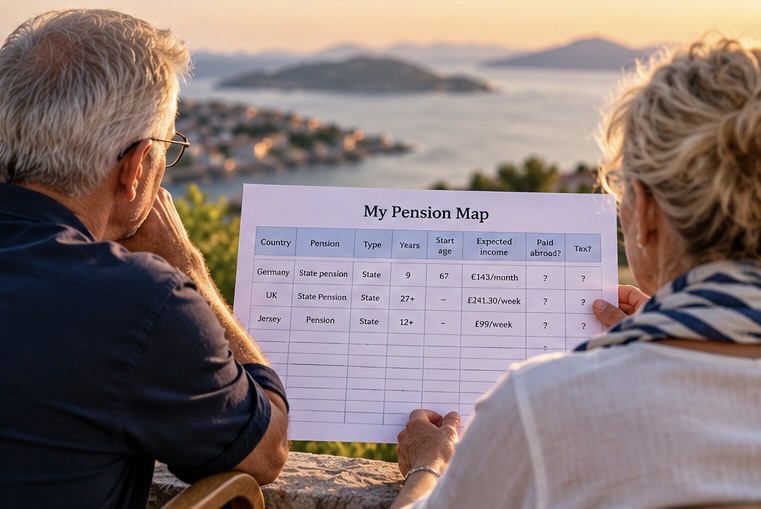
If you’ve worked in several countries, you may have more pensions than you realise — and they don’t necessarily work together automatically.

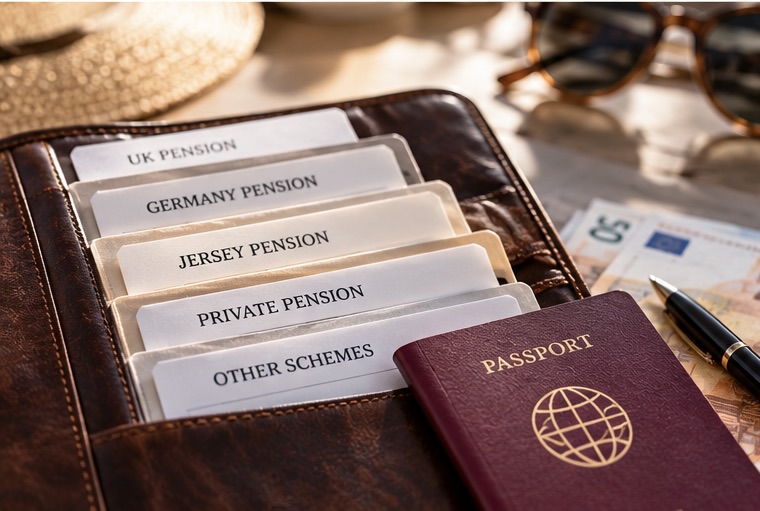
1. You may have more pensions than you realise
-
-
State/social-security pensions
-
Workplace/occupational pensions
-
Private pensions
-
National retirement schemes such as Singapore CPF
-
Other retirement assets
-
2. Start with your international work history
For every country you’ve lived or worked in, the question is:
-
-
Did I work there?
-
How long?
-
Did I pay social-security contributions?
-
Did I join an employer pension?
-
Do I have a private pension?
-
Do I have any other retirement entitlement?
-

3. Don’t assume one country knows about another;
Pension systems are generally separate. Joining them at a later point? Think carefully about this.
Working in several countries doesn’t necessarily create one combined pension account.
4. Ask yourself these important questions about every pension!
-
-
When can I start receiving it?
-
Can I receive it if I live abroad?
-
What currency will I receive?
-
Does it increase with inflation?
-
Where will it be taxed?
-
Is there a survivor/partner benefit?
-
Are there conditions or restrictions?
-
5. Create your Pension Map
A simple table such as this:
| Country | Pension | Type | Years | Start age | Expected income | Paid abroad? | Tax? |
| Germany | State pension | State | 10 | 67 | €303/month | ? | ? |
| UK | State Pension | State | 30+ | 67 | £240/week | ? | ? |
| US | Pension | State | 10+ | 66 | $105/week | ? | ? |