Your Passport Is Not Your Pension
If you’ve lived and worked in several countries, it’s easy to assume that your nationality will determine what happens to your retirement - It won’t! Your passport, your right to live somewhere and your pension rights are three different things. Understanding the difference is one of the first steps in planning an international retirement. Your passport tells you who you are
Your passport is evidence of your citizenship
It may give you important rights, including the ability to live, work or retire in a particular country without needing a visa. If you have more than one citizenship, you may have even more options. That can be a significant advantage when deciding where to spend your retirement. But your passport doesn’t tell you how much pension you’ve earned.
Your pension comes from your working history
Your pension rights generally come from what you have built up during your working life. Depending on the country and the pension system, that might be based on:
- Social security contributions
- National insurance contributions
- Years of employment
- An employer pension
- Private pension contributions
- A national retirement savings scheme
So you could be a citizen of one country but have built up significant pension rights somewhere else. You could also have pension rights in several countries. That’s why your nationality is only one part of the picture.
Your right to live somewhere is another question
Now we add a third piece. You might have a pension from Country A, a passport from Country B and want to retire in Country C. Can you? That’s a residency question. Country C may have rules about who can live there permanently.
You might need:
- A visa
- A residence permit
- Proof of income
- Health insurance
- A certain level of savings
- A particular type of residency status
Or you may have a right to live there because of your citizenship or another legal arrangement. Your pension doesn’t automatically give you the right to live in the country where you want to spend your retirement.
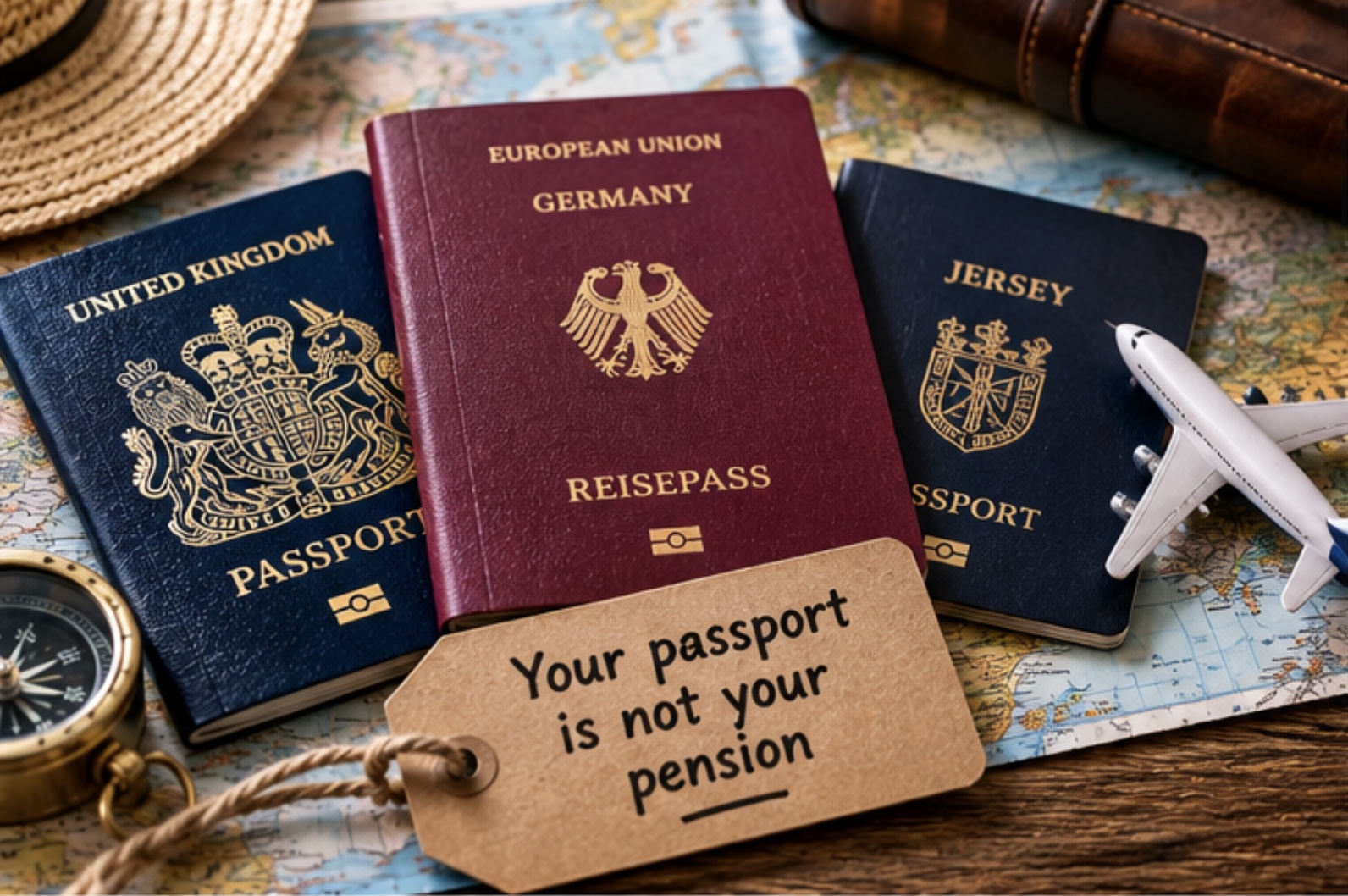
Here’s where international retirement gets complicated
Imagine someone who:
- Is a citizen of Germany
- Worked for ten years in Australia
- Worked for fifteen years in the UK
- Has pensions in both Australia and the UK
- Currently lives in Switzerland
- Wants to retire in Spain
Which country is their retirement country? There isn’t necessarily one answer. Their citizenship may point one way. Their pensions may point somewhere else. Their tax residence may be somewhere completely different. And their preferred retirement destination may be somewhere else again. This is why simply asking: “Which country should I retire to?” isn’t really the first question.
Five countries can mean five different questions
For someone with an international career, you may need to think about:
1. Where am I a citizen? This affects your passport and potentially your right to live somewhere.
2. Where have I worked? This determines where you may have accumulated pension rights.
3. Where can I live? This is about residency and immigration rules.
4. Where will I be tax resident? This can determine how different sources of income are taxed.
5. Where do I actually want to live? That’s the lifestyle question.
These five answers don’t have to be the same country.
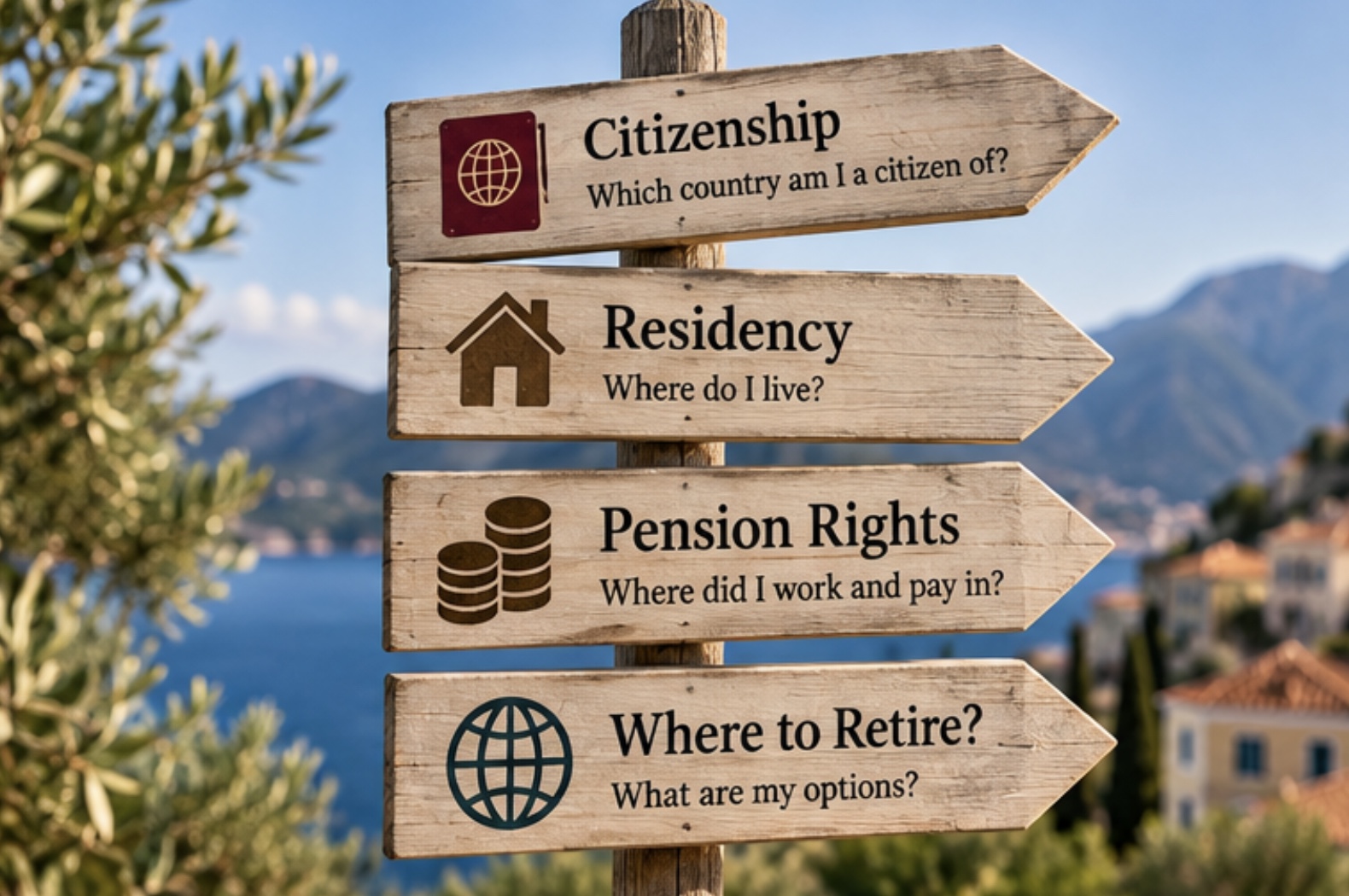
Don’t confuse pension entitlement with pension payment
There’s another important distinction. You may have earned a pension in one country. That doesn’t necessarily answer the question:
Can I receive it while living somewhere else?
And even if you can receive it abroad, there may be other questions.
For example:
- Will the amount continue to increase?
- What currency will you receive?
- How will it be taxed?
- Does a social security agreement affect your entitlement?
- What happens if you move again?
These are questions that need to be checked for the particular pension and the particular countries involved.
Your passport can still be one of your biggest retirement assets
None of this means your passport isn’t important. Quite the opposite. For someone with multiple citizenships, the right to live in a particular country without going through an immigration process could be extremely valuable.
It might give you:
- More choice about where to live
- Easier access to family
- Greater flexibility if your circumstances change
- A potential fallback country if you need to return home
But it should be thought of as a residency asset, not a pension asset.
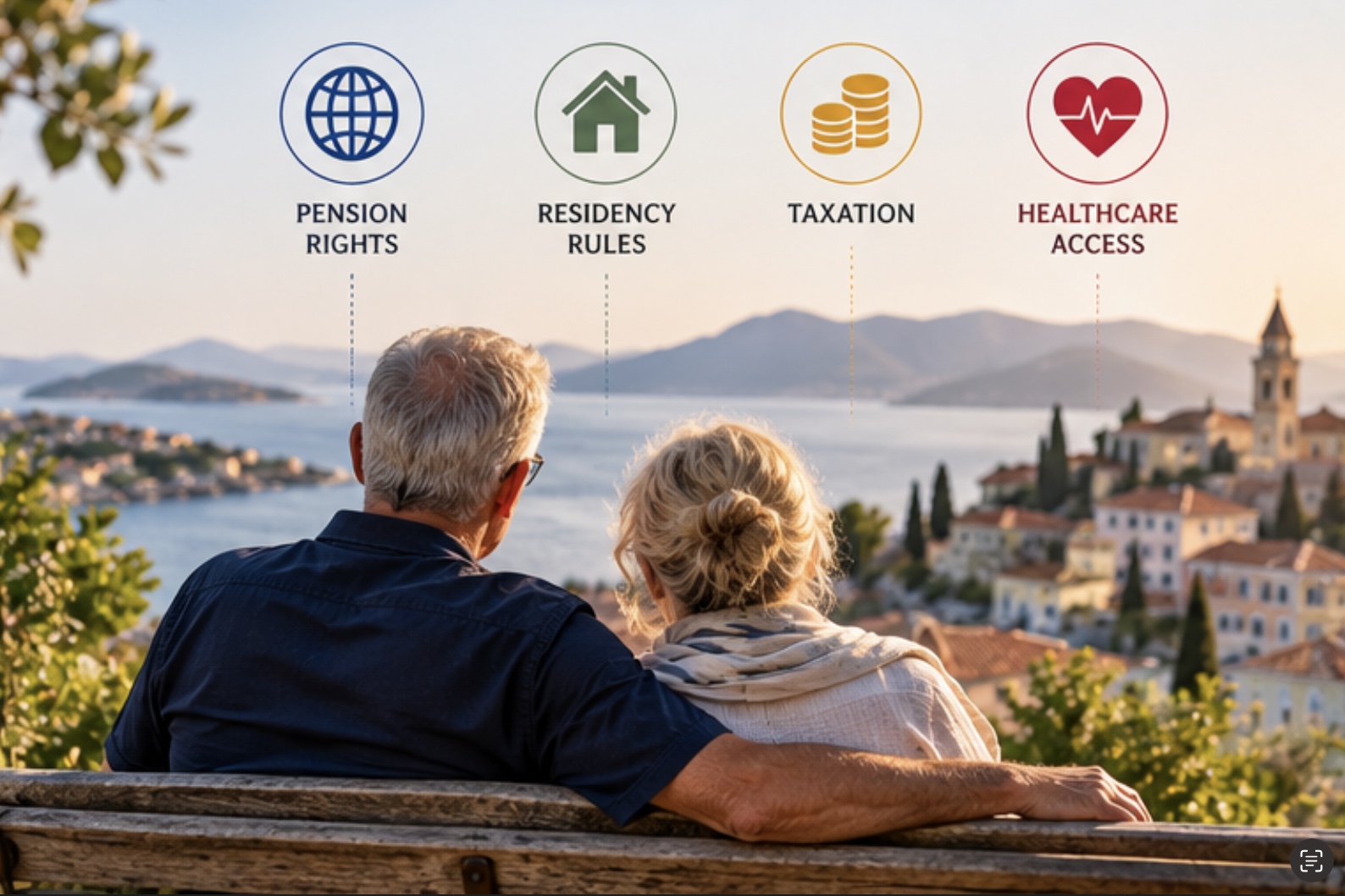
Start with your own international map
Before choosing where to retire, make four lists:
My citizenships
Where do I have the right to live?
My working countries
Where might I have earned pension rights?
My pension countries
Which countries or providers may owe me retirement income?
My potential retirement countries
Where would I actually like to live?
Then look at how those lists overlap. That’s where the interesting questions begin. Because international retirement isn’t simply about finding the best country to retire to.
It’s about finding a place where your particular combination of citizenship, pension rights, residency, tax position, finances, healthcare and lifestyle can work together.
And that’s a very different question. Until next time in this series of Retirement Planning After Living Abroad.
